Handling method
Forklift pockets, pallet interfaces, lifting points and gross weight are developed around the site handling equipment.

Reusable bulk containment
A reusable stainless steel intermediate bulk container for hygienic liquid storage, staging and controlled movement within the production site.
Quick answer
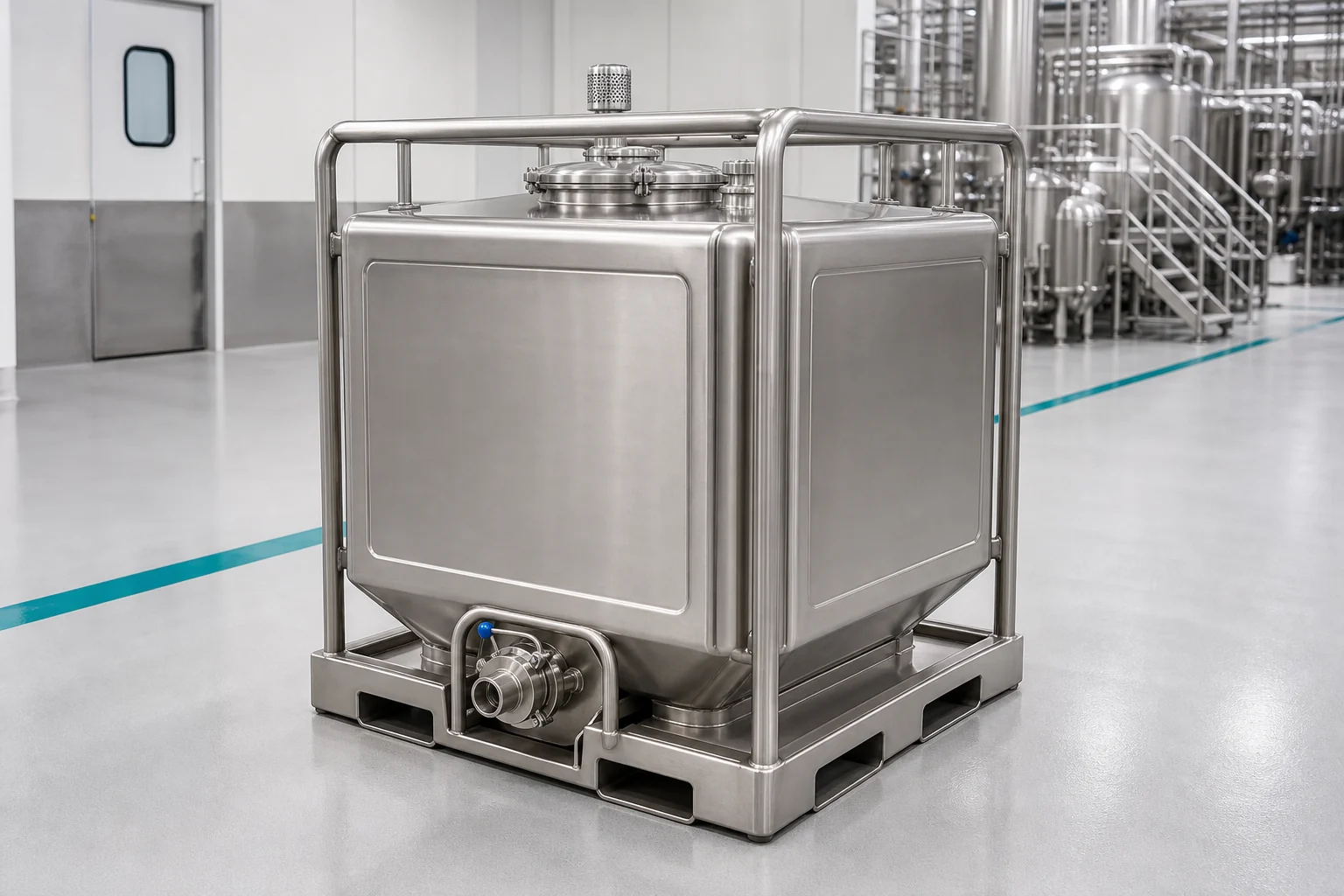
A stainless steel IBC storage tank combines reusable bulk containment with a transportable protective frame. It is suited to internal logistics and batch staging when the vessel, frame, lifting points and discharge system are designed for the actual product and handling method.
An IBC may be moved by forklift, pallet equipment or a dedicated handling system, so mechanical protection is as important as product-contact design. Filled weight, dynamic loads and the intended stacking or storage practice must be defined.
Vessentra coordinates container geometry, frame, lifting interfaces, top access, venting and bottom discharge around the product, cleaning method and site logistics. Transport outside the production site requires a separate review of applicable rules and certification.
Typical applications
Application details are reviewed before equipment configuration is finalised.
Engineering configuration
The equipment is developed from process inputs, operating conditions, cleaning requirements and site interfaces.
Forklift pockets, pallet interfaces, lifting points and gross weight are developed around the site handling equipment.
The stainless steel frame protects the vessel and supports stable storage, movement and connection at the use point.
Top access, venting, valve protection and low-point outlet geometry are arranged for controlled batch transfer.
Access, spray devices or cleaning-station interfaces are selected around product changeover and reuse strategy.
Specification guidance
Project limits are confirmed through engineering review. These fields describe the decisions needed for an accurate, application-specific configuration.
| Container format | Framed reusable stainless steel IBC |
|---|---|
| Working volume | Selected for batch and logistics requirements |
| Product-contact material | Hygienic stainless steel selected by duty |
| Handling | Forklift, pallet or project-specific interfaces |
| Frame | Protective stainless steel construction |
| Discharge | Protected low-point valve and connection options |
| Cleaning | Manual, spray or station-based options |
| Transport status | On-site or regulated transport scope confirmed separately |
Common questions
It is used for reusable storage, staging and movement of liquid ingredients or intermediate products between receiving, processing and filling operations.
Yes, when the frame and forklift pockets are engineered for the defined gross load, fork dimensions, handling direction and site operating procedure.
Only when the complete frame and stacking interface have been designed and verified for the specified load and operating conditions. Stacking must not be assumed by default.
Regulated transport can require specific approvals, testing and markings. The intended transport scope and destination rules must be confirmed before design.
Talk to engineering
Share the product, working volume, operating conditions, cleaning method and project location. We will use them to structure the next engineering conversation.