Ingredient feeds
Source vessels, pumps, valves and line routing are mapped around the recipe and required dosing method.

Multi-ingredient batch control
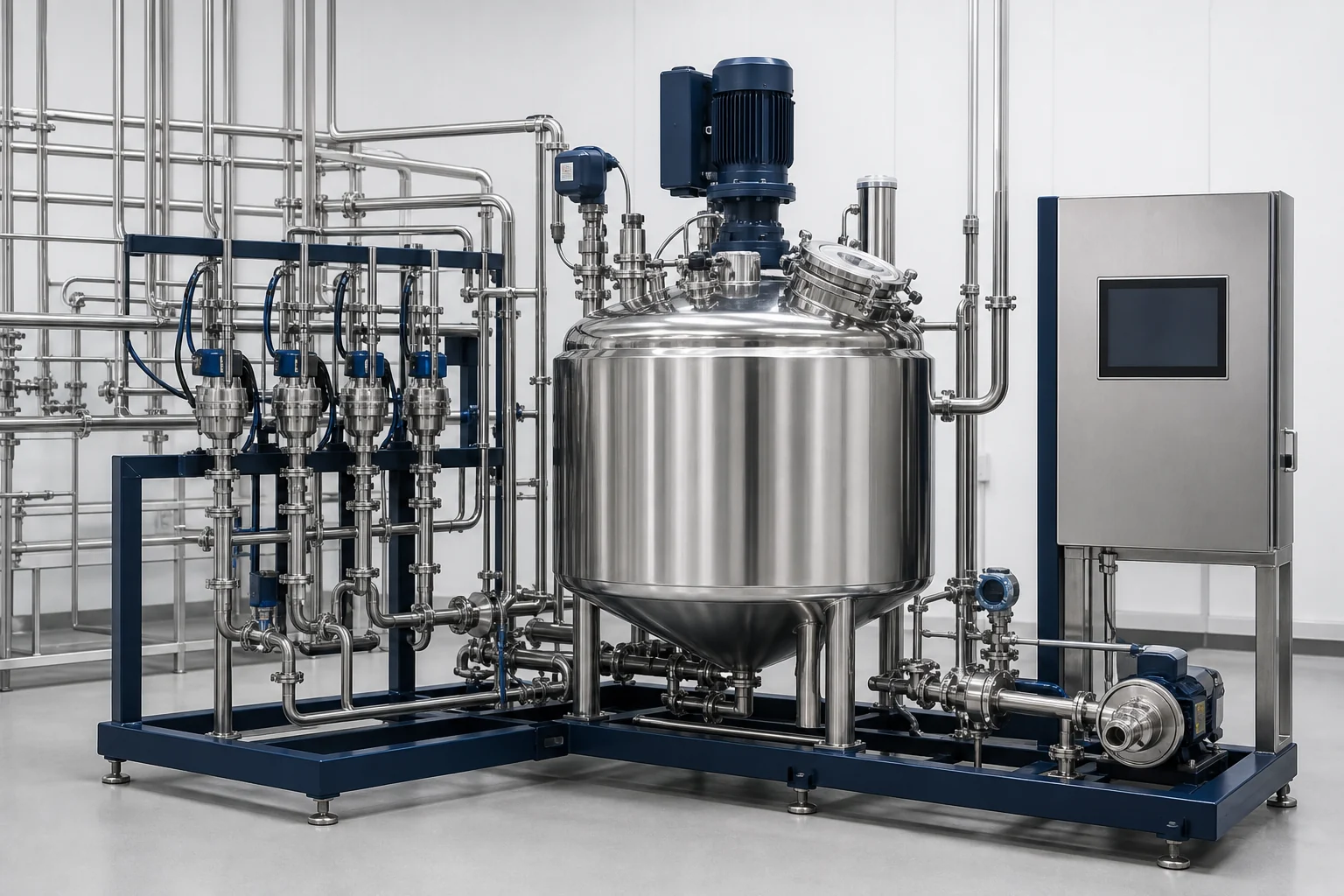
An integrated batch vessel for coordinating multiple liquid ingredients, controlled addition, mixing, measurement and finished-batch transfer.
Quick answer
A liquid batching and compounding tank receives measured ingredients in a defined sequence, mixes them to the required condition and transfers the completed batch onward. It brings vessel design, dosing interfaces and recipe control into one coordinated process step.
Repeatable batching depends on more than vessel volume. Ingredient source, dosing accuracy, line contents, addition rate, mixing time, temperature and transfer recovery all influence the batch result and material balance.
Vessentra coordinates the tank with pumps, valves, flow or weight measurement, utilities and control interfaces. The automation boundary can range from local operation to recipe-based sequencing connected with the wider production system.
Typical applications
Application details are reviewed before equipment configuration is finalised.
Engineering configuration
The equipment is developed from process inputs, operating conditions, cleaning requirements and site interfaces.
Source vessels, pumps, valves and line routing are mapped around the recipe and required dosing method.
Load cells, flow measurement, level and temperature can be combined according to accuracy and process needs.
Permissives, addition steps, mixing times and operator confirmations can be organised into a repeatable sequence.
Outlet geometry, pump selection and line clearing are reviewed to manage product recovery and cross-batch carryover.
Specification guidance
Project limits are confirmed through engineering review. These fields describe the decisions needed for an accurate, application-specific configuration.
| Batch range | Defined from recipe and usable working volume |
|---|---|
| Ingredient sources | Bulk, intermediate or local dosing interfaces |
| Dosing measurement | Weight, flow or project-specific method |
| Agitation | Selected for addition and uniformity requirements |
| Thermal control | Optional heating, cooling and holding |
| Valve arrangement | Sanitary manual or automated configuration |
| Controls | Local, PLC or recipe-sequence integration |
| Cleaning | Vessel and connected path reviewed together |
Common questions
Common strategies include vessel weight gain, flow measurement or pre-weighed intermediate addition. Accuracy, line contents and recipe quantities guide the selection.
Yes. Automated valves, pumps, permissives, timers and process measurements can be coordinated through a project-specific control sequence.
Drainable pipework, controlled line clearing, suitable valve placement and a defined cleaning sequence help manage residual product.
Integration can be evaluated when interface protocol, data ownership, recipe management and validation responsibilities are defined.
Talk to engineering
Share the product, working volume, operating conditions, cleaning method and project location. We will use them to structure the next engineering conversation.