Product-contact design
Wetted materials, elastomers, surface treatment and weld finishing are defined from the solution and cleaning chemistry.

Controlled pharmaceutical preparation
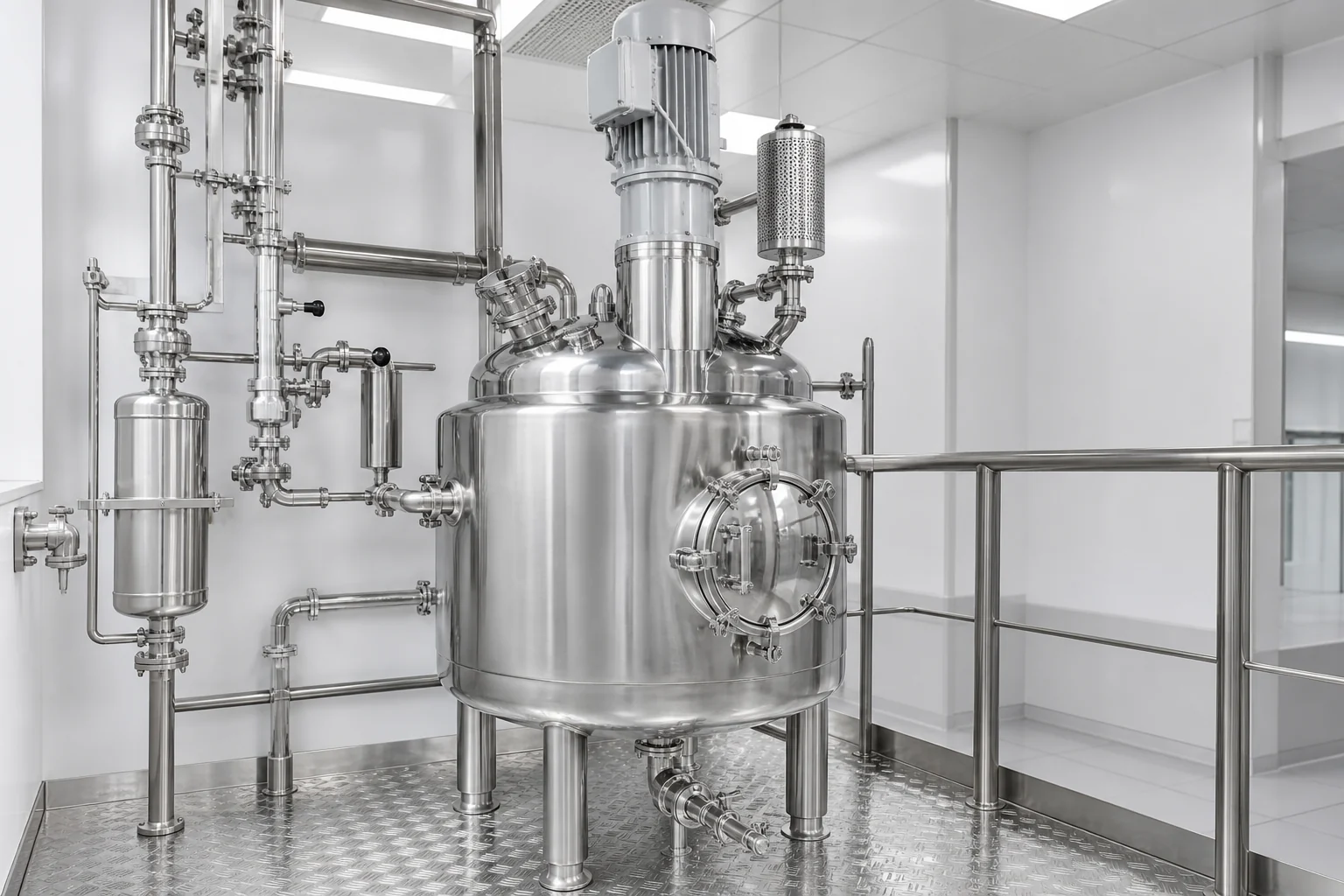
A project-specific 316L preparation vessel for controlled compounding, hygienic transfer and integration with pharmaceutical cleaning strategies.
Quick answer
A pharmaceutical solution preparation tank is used to compound liquid ingredients under controlled product-contact, mixing, transfer and cleaning conditions. Suitability depends on the user requirement specification, process risk assessment and agreed project standards—not material grade alone.
Pharmaceutical preparation requires coordination of surface treatment, weld finishing, drainability, venting, sampling, instrumentation and cleaning coverage. The intended solution and process state define the relevant design details.
Vessentra develops the vessel from the project URS and aligns product-contact components, automation and documentation with the qualification approach. Regulatory, GMP and pressure-code requirements are confirmed for each installation and scope.
Typical applications
Application details are reviewed before equipment configuration is finalised.
Engineering configuration
The equipment is developed from process inputs, operating conditions, cleaning requirements and site interfaces.
Wetted materials, elastomers, surface treatment and weld finishing are defined from the solution and cleaning chemistry.
Agitation, minimum operating level and addition points are selected for the compounding sequence and required uniformity.
Spray coverage, drainability, venting, condensate paths and instruments are reviewed for the intended cycles.
Material, weld, surface, test and inspection records can be structured around the agreed project requirements.
Specification guidance
Project limits are confirmed through engineering review. These fields describe the decisions needed for an accurate, application-specific configuration.
| Product-contact material | 316L stainless steel |
|---|---|
| Surface treatment | Defined by hygiene and qualification strategy |
| Operating mode | Atmospheric, vacuum or project-defined duty |
| Agitation | Hygienic duty-matched arrangement |
| Cleaning | CIP-ready features available |
| Sterilisation | SIP-ready evaluation where required |
| Instrumentation | Hygienic project-specific instruments |
| Documentation | Agreed traceability and test package |
Common questions
No. Material grade is only one element. Design, fabrication, documentation, installation, cleaning, operation and qualification must be considered together.
Yes, when spray coverage, steam distribution, venting, condensate removal, seals and instruments are engineered for the intended cycles.
Typical inputs include product and cleaning media, batch range, operating conditions, surface requirements, process sequence, instruments, automation, documentation and installation constraints.
The vessel outlets, transfer path and instruments can be coordinated with a project-specific filtration step, while filter selection and validation remain part of the complete process design.
Talk to engineering
Share the product, working volume, operating conditions, cleaning method and project location. We will use them to structure the next engineering conversation.