Magnetic drive selection
Required torque, speed, product properties and operating temperature are checked against the coupling and motor arrangement.

Sealed high-hygiene mixing
A compact bottom-mounted magnetic drive arrangement for high-hygiene processes, cleanable product contact and effective mixing at reduced liquid levels.
Quick answer
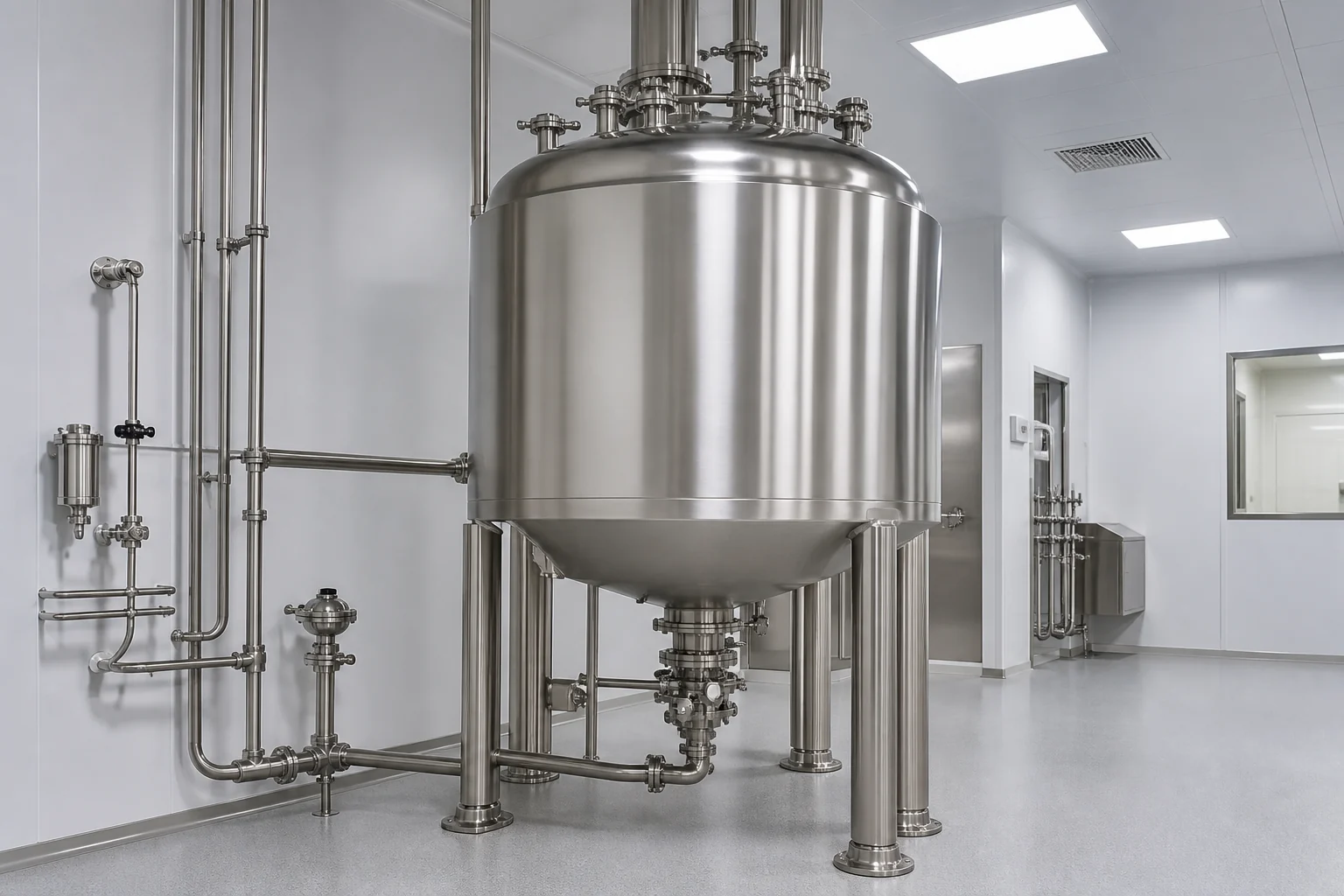
A bottom-entry magnetic mixing tank transfers torque through a containment boundary using magnetic coupling, avoiding a conventional rotating shaft penetration through the vessel wall. It is considered for high-hygiene duties, cleanability and useful low-level mixing.
Magnetic coupling changes the containment and maintenance approach, but it does not remove the need for careful process selection. Torque demand, viscosity, solids, operating level, temperature and cleaning cycle must remain within the selected mixer envelope.
Vessentra coordinates the vessel bottom, magnetic mixer, impeller clearance, drain outlet and service access. Product-contact materials and cleaning or sterilisation requirements are confirmed against the project specification.
Typical applications
Application details are reviewed before equipment configuration is finalised.
Engineering configuration
The equipment is developed from process inputs, operating conditions, cleaning requirements and site interfaces.
Required torque, speed, product properties and operating temperature are checked against the coupling and motor arrangement.
Mixer position, impeller clearance, outlet and drainability are coordinated to avoid conflicts and support cleaning.
Product-contact materials, containment components and elastomers are selected for the medium and cleaning cycle.
Clearance beneath the vessel and removal paths are planned around installation and maintenance requirements.
Specification guidance
Project limits are confirmed through engineering review. These fields describe the decisions needed for an accurate, application-specific configuration.
| Mounting | Bottom-entry magnetic coupling |
|---|---|
| Product-contact boundary | No conventional rotating shaft penetration |
| Operating range | Verified for project viscosity, level and torque |
| Impeller | Selected for circulation and shear objective |
| Product-contact material | Defined by process compatibility |
| Cleaning | CIP-ready features available |
| Sterilisation | Project-specific SIP evaluation where required |
| Service clearance | Defined around the selected drive and installation |
Common questions
An external drive rotates magnets that transmit torque across a sealed containment boundary to the internal impeller, avoiding a conventional dynamic shaft penetration.
No. Available torque, impeller size, speed, temperature and coupling design define the usable range. Product data must be reviewed before selection.
Locating the impeller near the vessel bottom can maintain local circulation at lower levels, although the minimum effective level is specific to the tank and mixer geometry.
Yes, subject to the user requirement specification, materials, cleanability, sterilisation strategy, documentation and applicable project standards.
Talk to engineering
Share the product, working volume, operating conditions, cleaning method and project location. We will use them to structure the next engineering conversation.