Product-contact design
316L surfaces, welds, fittings, dead-leg control and drainability are specified from the product, cleaning method and quality requirements.

Controlled pharmaceutical synthesis
A 316L product-contact reactor developed around pharmaceutical synthesis, controlled additions, containment and documented production requirements.
Quick answer
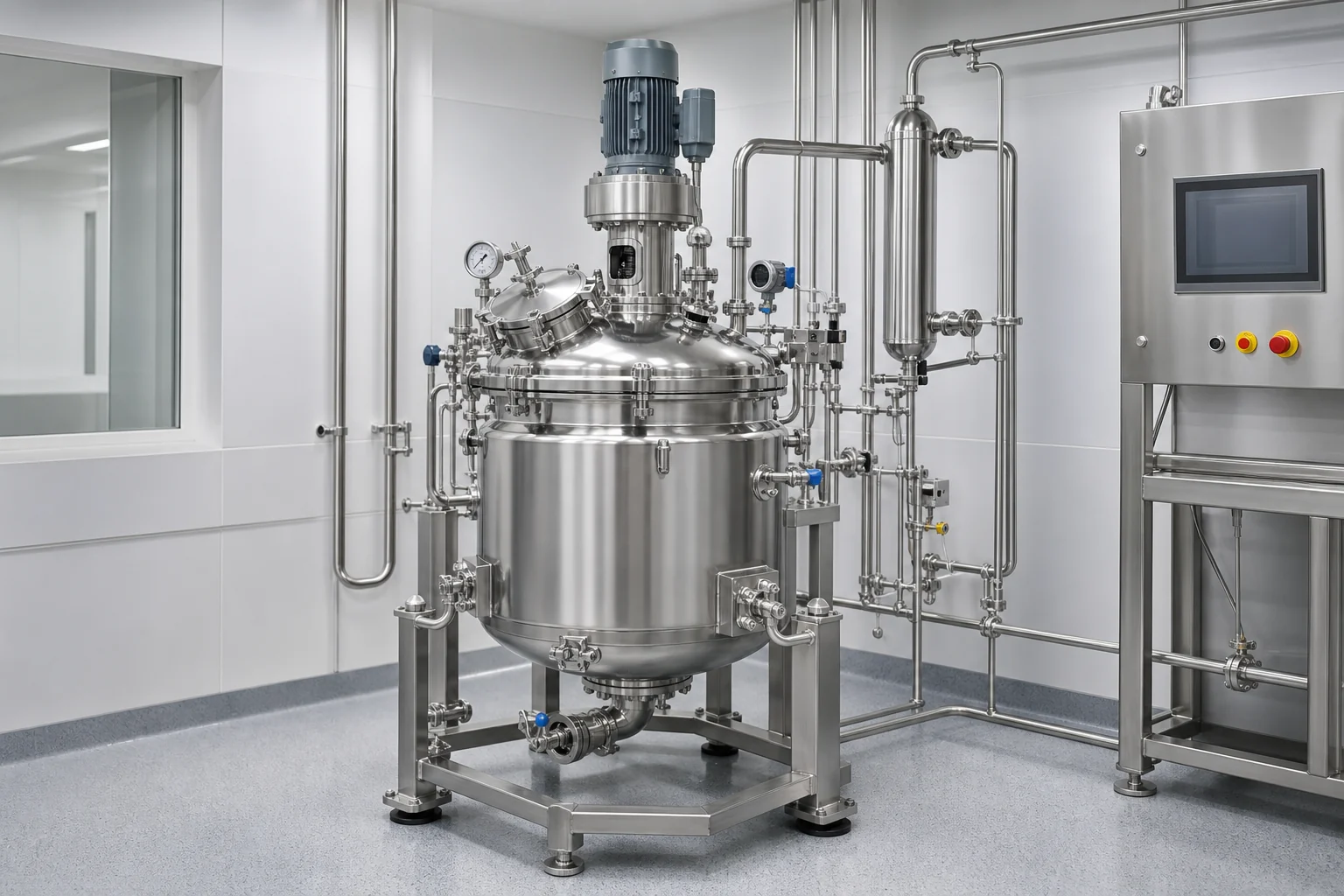
A 316L pharmaceutical synthesis reactor is a product-contact reaction vessel configured for controlled chemical processing of pharmaceutical ingredients or intermediates. The design can coordinate material addition, agitation, heating and cooling, pressure or vacuum, containment, sampling, cleaning and batch controls against an approved user requirement specification.
Pharmaceutical reactor design extends beyond selecting 316L stainless steel. Product-contact geometry, weld quality, surface condition, drainability, seal arrangement, cleanability, cross-contamination control and documentation must align with the process and facility quality strategy.
Vessentra translates the user requirement specification into a defined vessel and system scope. Material records, fabrication documentation, inspection, automation and cleaning provisions are agreed project by project; equipment suitability and qualification remain tied to the complete installed process.
Typical applications
Application details are reviewed before equipment configuration is finalised.
Engineering configuration
The equipment is developed from process inputs, operating conditions, cleaning requirements and site interfaces.
316L surfaces, welds, fittings, dead-leg control and drainability are specified from the product, cleaning method and quality requirements.
Closed charging, sampling, venting, condenser interfaces and seal support are developed around exposure, solvent and containment needs.
Manual cleaning, CIP coverage and any SIP evaluation are based on soil characteristics, utilities, component limits and facility procedures.
Recipe sequencing, instrument data, alarms and electronic record interfaces can be scoped to the approved automation and validation plan.
Specification guidance
Project limits are confirmed through engineering review. These fields describe the decisions needed for an accurate, application-specific configuration.
| Process duty | Pharmaceutical synthesis and intermediate reaction stages |
|---|---|
| Product-contact material | 316L stainless steel with project-defined documentation |
| Surface and weld scope | Finish, inspection and records agreed to the URS |
| Agitation | Reaction-selected impeller and variable-speed drive |
| Thermal control | Jacket or coil designed from process heat duty |
| Pressure and vacuum | Operating and design limits established per project |
| Cleaning provision | Manual, CIP-ready or SIP-evaluated configuration |
| Automation | Local HMI, recipe and data-integration options |
Common questions
316L is widely considered for its corrosion resistance, weldability and suitability for controlled product-contact finishes. Final material selection still depends on solvents, reactants, cleaning chemistry, temperature and corrosion assessment.
No. Material grade alone does not establish GMP suitability. Design, fabrication, documentation, installation, cleaning, controls, qualification, operating procedures and the wider quality system must work together.
Yes, when the process and facility require it. Spray coverage, drainage, seals, instruments, valves, condensate removal, utility quality and component temperature limits must be evaluated as a complete cleaning or sterilization cycle.
The project scope can include material certificates, weld and inspection records, surface-finish records, pressure-test documentation, instrument data and other agreed turnover documents. The exact package should be defined in the URS and quality plan.
It can be engineered for defined solvent service and operating limits, subject to compatibility, hazardous-area classification, vent and condenser design, seal selection, grounding and the applicable pressure-vessel and process-safety requirements.
Talk to engineering
Share the product, working volume, operating conditions, cleaning method and project location. We will use them to structure the next engineering conversation.