Reaction basis
Chemistry, batch sequence, heat duty, phase behavior and potential gas or solids formation define the equipment arrangement.

Versatile controlled batch reaction
A configurable stainless steel reactor vessel for controlled chemical reactions, thermal processing and repeatable batch production.
Quick answer
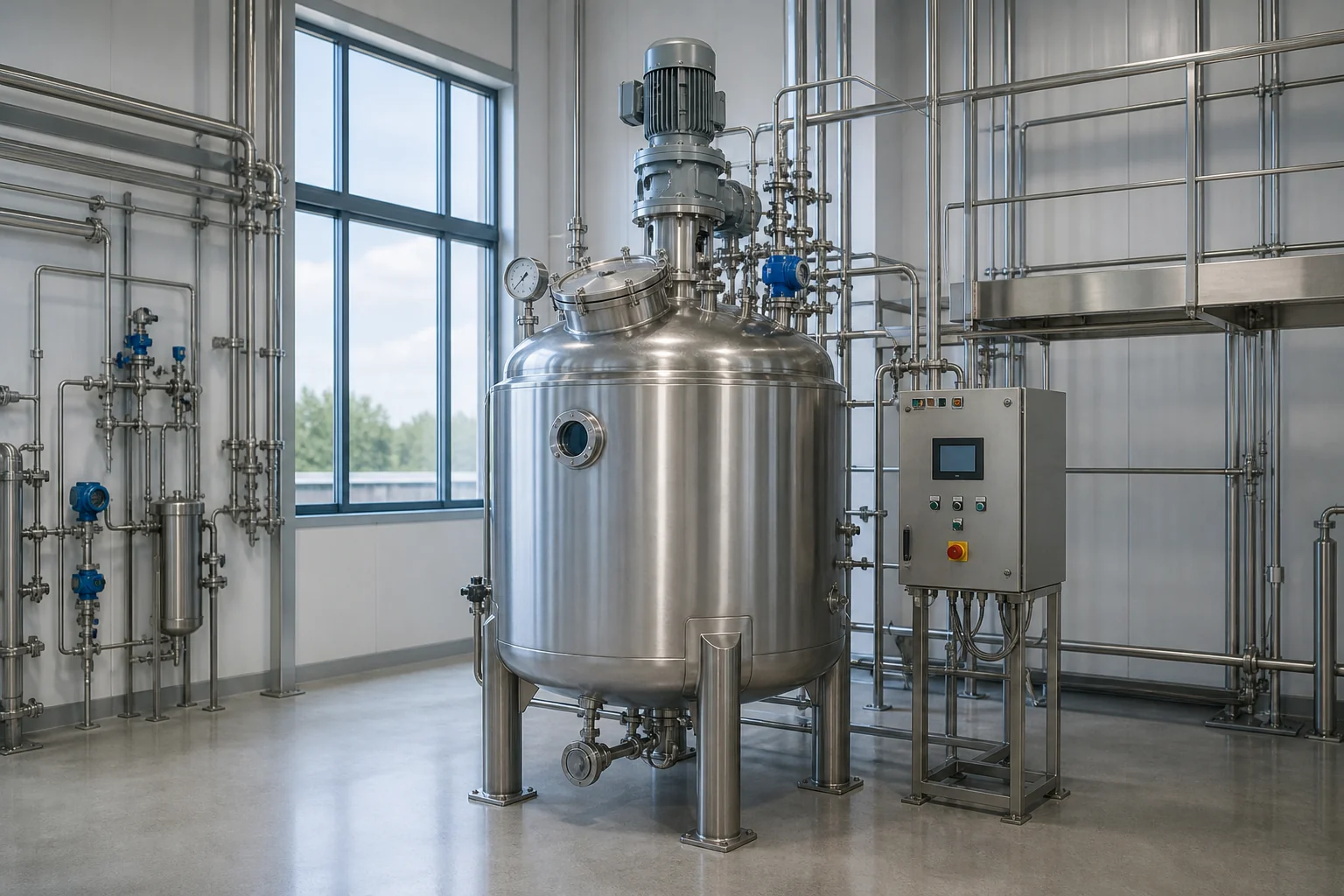
A stainless steel chemical reactor vessel is a sealed, agitated process vessel designed around a defined reaction rather than general blending alone. It coordinates mixing, heat transfer, material addition, pressure or vacuum conditions, vent handling and instrumentation so the required reaction path can be controlled from charge through discharge.
Reactor design begins with chemistry and operating sequence. Reaction rate, heat release or demand, phase behavior, viscosity change, gas generation, solids formation and addition strategy influence the vessel geometry, agitation system and thermal area.
Vessentra develops the vessel, jacket or coil, agitator, seal, nozzles, instruments and control interfaces as one process package. Mechanical limits and safeguards are established from the approved process design basis and applicable site requirements.
Typical applications
Application details are reviewed before equipment configuration is finalised.
Engineering configuration
The equipment is developed from process inputs, operating conditions, cleaning requirements and site interfaces.
Chemistry, batch sequence, heat duty, phase behavior and potential gas or solids formation define the equipment arrangement.
Impeller type, speed, power and baffles are selected for the changing viscosity, dispersion and heat-transfer demands of the reaction.
Jacket zones, internal coils or external loops are evaluated against heat-up, reaction control, hold and cooling requirements.
Seal design, vent path, additions, instrumentation and interlocks are coordinated with the operating envelope and site safety review.
Specification guidance
Project limits are confirmed through engineering review. These fields describe the decisions needed for an accurate, application-specific configuration.
| Process duty | Chemical reaction, conversion or reactive batch processing |
|---|---|
| Working volume | Sized from batch range, headspace and reaction behavior |
| Design envelope | Pressure, vacuum and temperature defined per project |
| Product-contact material | Stainless steel grade selected for chemical compatibility |
| Agitation | Duty-selected impeller, baffles and variable-speed drive |
| Heat transfer | Jacket, coil or external loop according to thermal load |
| Seal and venting | Selected for process containment and operating conditions |
| Instrumentation | Project-specific temperature, pressure, level and control package |
Common questions
A mixing tank is primarily selected to blend or suspend materials. A reactor vessel is designed around reaction kinetics, heat release or demand, pressure, venting, additions, containment and the changing physical properties of the batch.
The grade depends on reactants, intermediates, cleaning agents, temperature and corrosion risk. 304, 316L or another alloy may be evaluated, but material selection must follow a compatibility review.
A reactor can be engineered for a specified pressure or vacuum envelope. The vessel, jacket, nozzles, seal, vent system and protection devices must all be designed for the approved conditions and applicable code.
Provide the reaction recipe, batch range, ingredient properties, addition sequence, viscosity profile, heat-release or heating data, target temperature curve, pressure or vacuum conditions, vent load, materials of construction and site utilities.
Talk to engineering
Share the product, working volume, operating conditions, cleaning method and project location. We will use them to structure the next engineering conversation.